Noto - Late Baroque Towns of the Val di Noto (South-Eastern Sicily)
Noto, Italy
08.09.2022

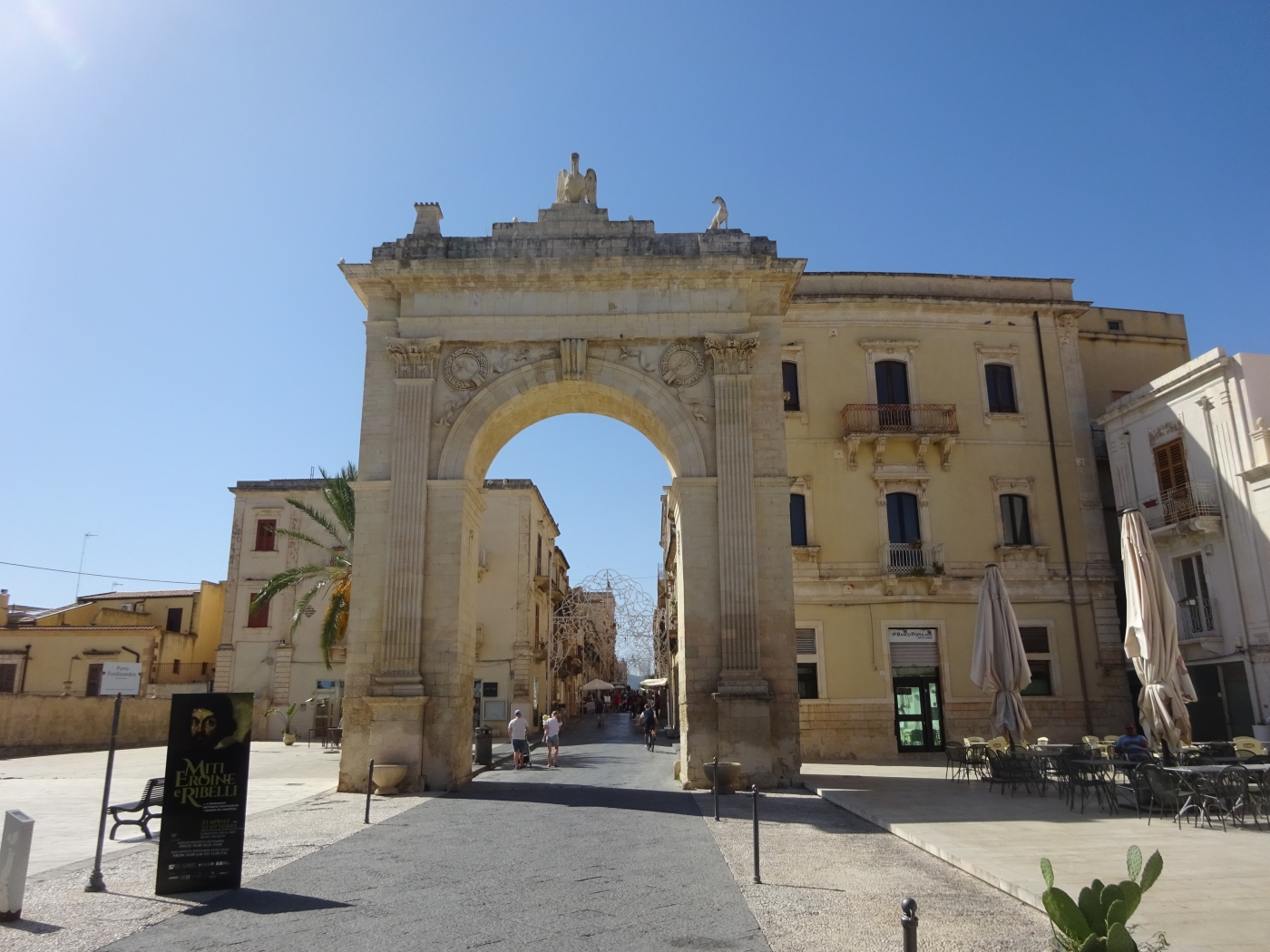
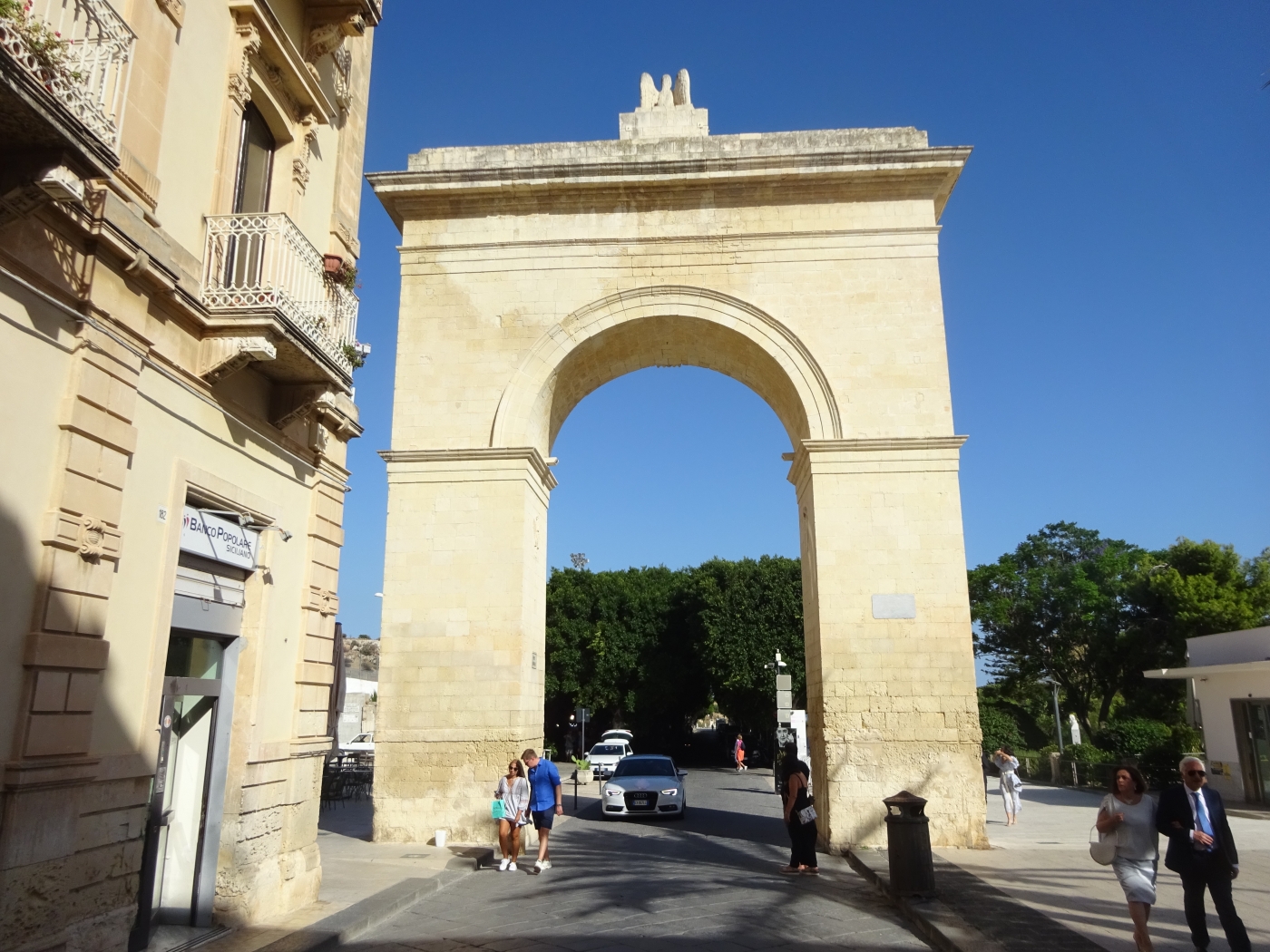
The city of Noto, nestled in the southeastern corner of Sicily, Italy, stands as a breathtaking testament to human resilience and artistic vision. It is the undisputed crown jewel among the eight towns comprising the UNESCO World Heritage site "Late Baroque Towns of the Val di Noto," recognized for their extraordinary architectural and artistic achievements following a devastating natural catastrophe.
The Phoenix from the Ashes
The modern city of Noto owes its existence and unique character to a tragic event: the catastrophic 1693 Sicily earthquake. This powerful tremor obliterated the original medieval town, known today as Noto Antica, situated several kilometers north of the current location. With an indomitable spirit, the inhabitants decided to rebuild, not on the ruins of the past, but on a new, more strategic site. This decision allowed for an unprecedented urban planning experiment, creating a city designed from scratch according to the most advanced Baroque principles of the time.
A Symphony in Stone
The reconstruction, spanning decades, brought forth an unparalleled ensemble of late Baroque architecture. Architects such as Rosario Gagliardi, Vincenzo Sinatra, and Paolo Labisi transformed the new site into a harmonious urban fabric characterized by wide, straight streets, grand squares, and a captivating interplay of light and shadow on honey-coloured limestone buildings. This cohesive design, marked by opulent facades, intricate balconies, and decorative elements, defines the distinctive aesthetic known as Sicilian Baroque.
Architectural Masterpieces
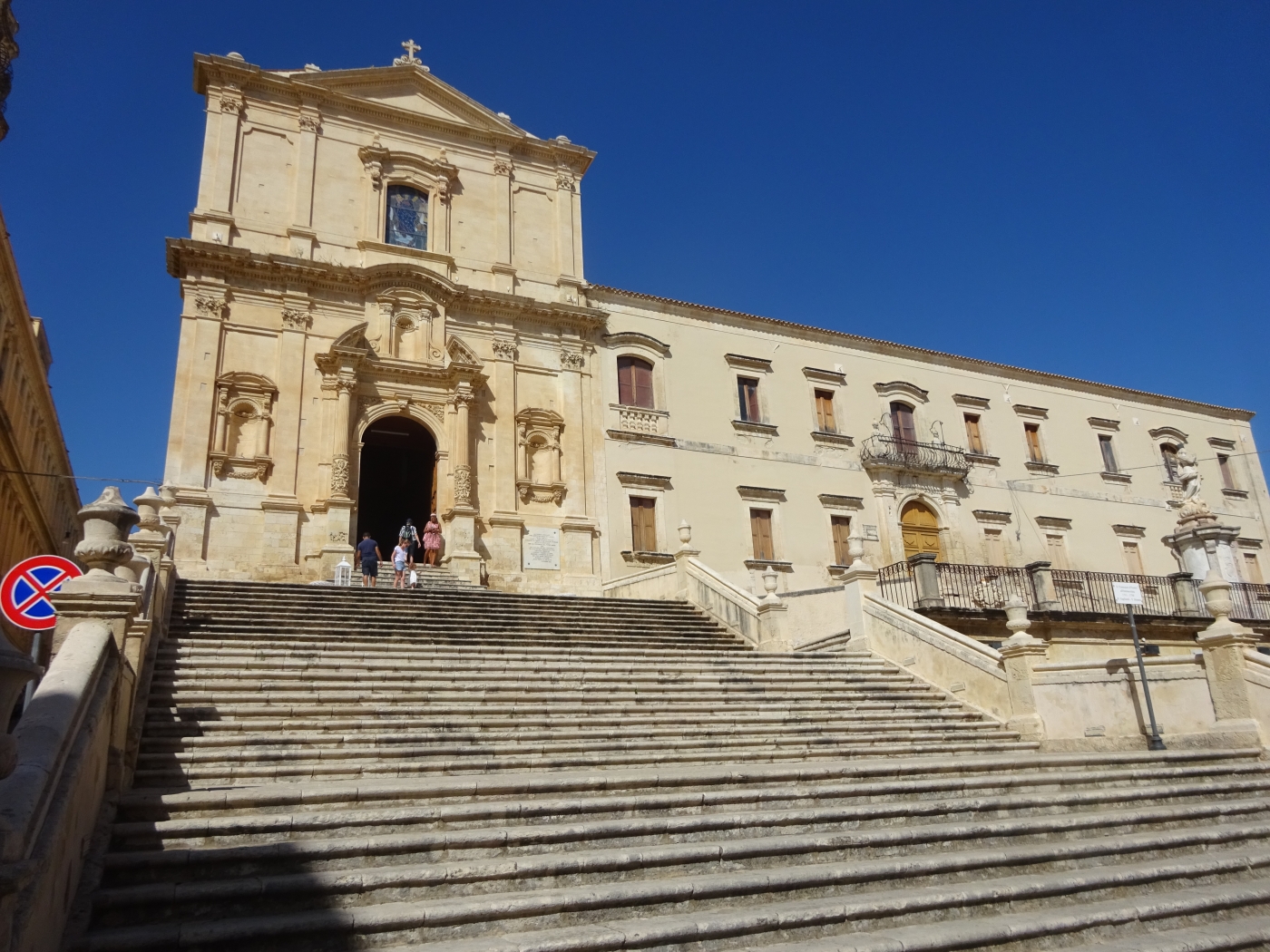
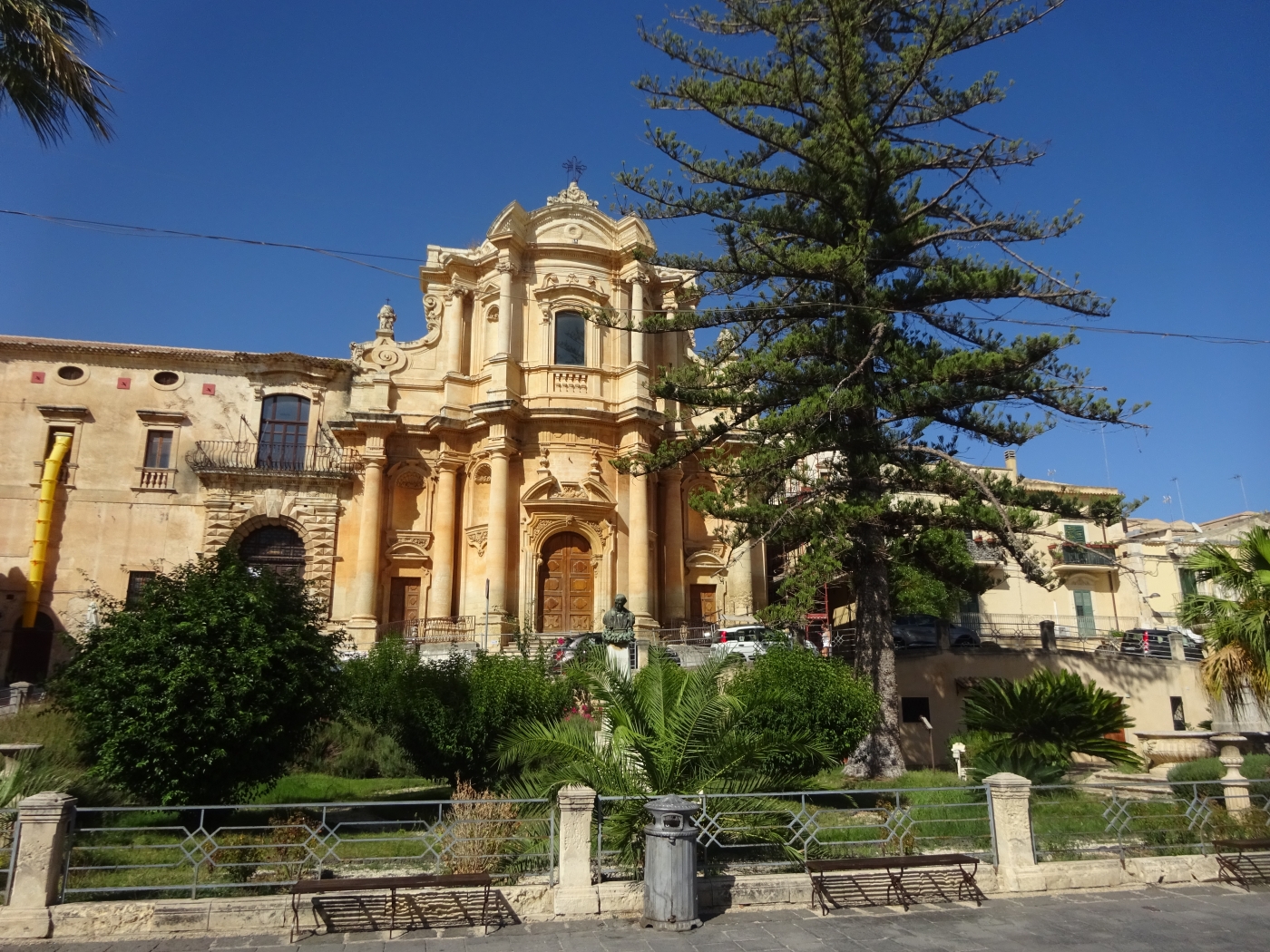
Among the city’s many architectural gems, several stand out. The majestic Noto Cathedral, officially the Cattedrale di San Nicolò, dominates the city's highest point, its grand staircase leading to an awe-inspiring façade. Nearby, the elegant Palazzo Ducezio, now the town hall, boasts a neoclassical interior but a Baroque exterior. Another highlight is the opulent Palazzo Nicolaci di Villadorata, famed for its elaborately carved corbels depicting mythical creatures and figures supporting its balconies. The Church of San Domenico, with its convex facade, further exemplifies the imaginative flair of Noto's architects, showcasing the unity of urban planning and artistic expression that makes Noto an enduring symbol of Baroque brilliance.
Weiterführende Links
The eight towns in south-eastern Sicily: Caltagirone, Militello Val di Catania, Catania, Modica, Noto, Palazzolo, Ragusa and Scicli, were all rebuilt after 1693 on or beside towns existing at the time of the earthquake which took place in that year. They represent a considerable collective undertaking, successfully carried out at a high level of architectural and artistic achievement. Keeping within the late Baroque style of the day, they also depict distinctive innovations in town planning and urban building.
Noto (Sicilian: Notu; Latin: Netum) is a city and comune in the Province of Syracuse, Sicily, Italy. It is 32 kilometres (20 mi) southwest of the city of Syracuse at the foot of the Hyblaean Mountains. It lends its name to the surrounding area Val di Noto. In 2002 Noto and its church were declared a UNESCO World Heritage Site.