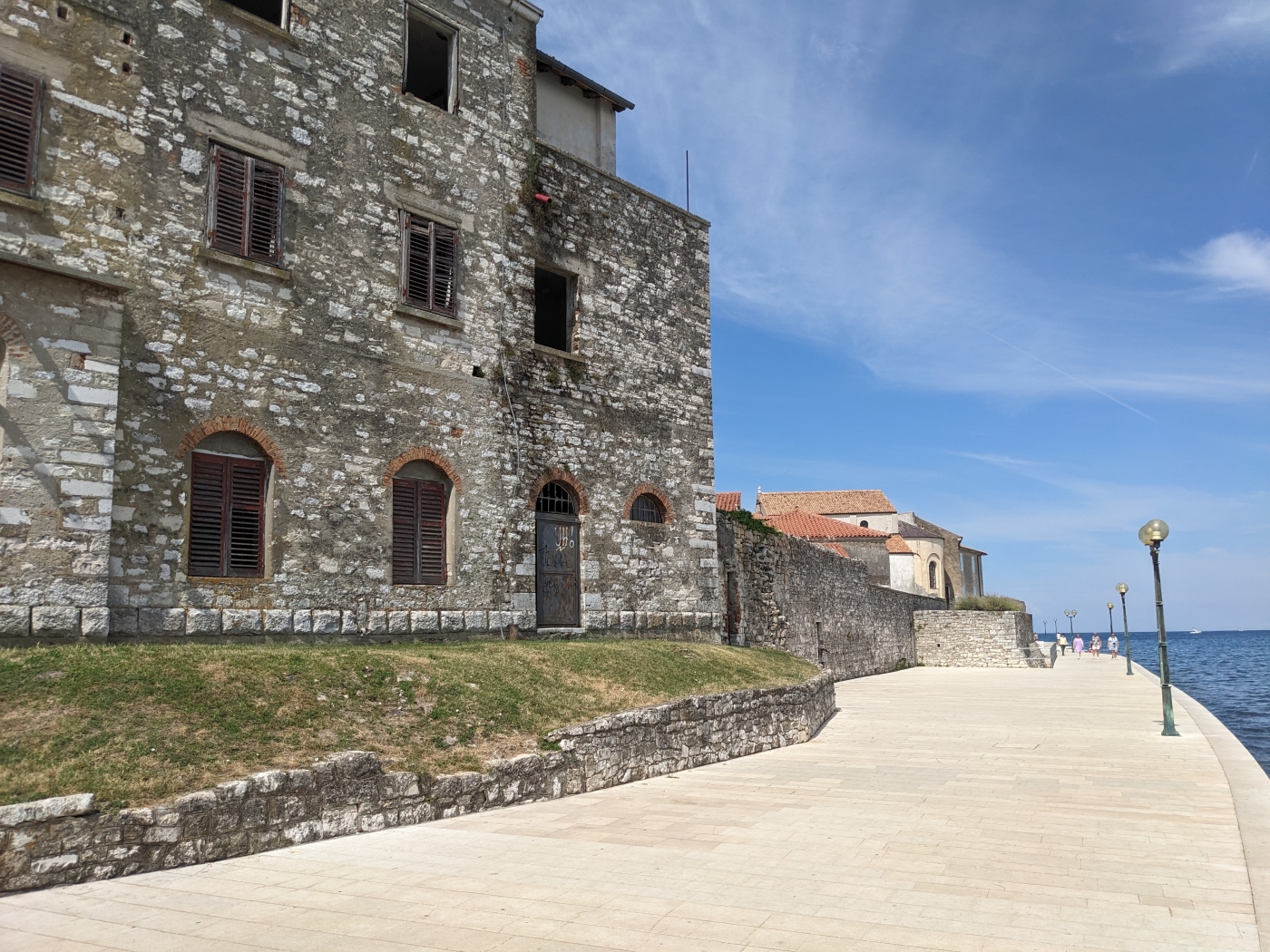
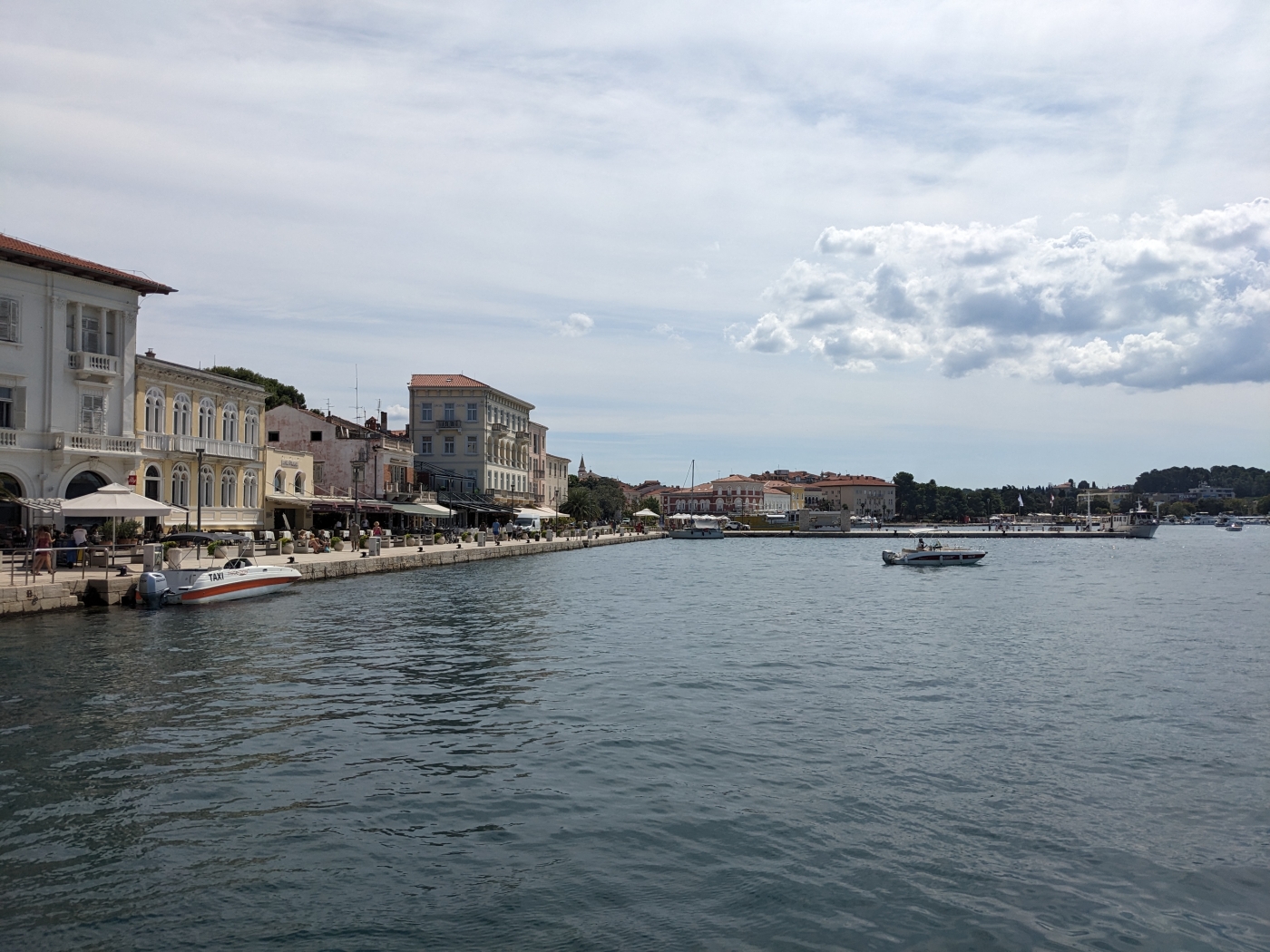
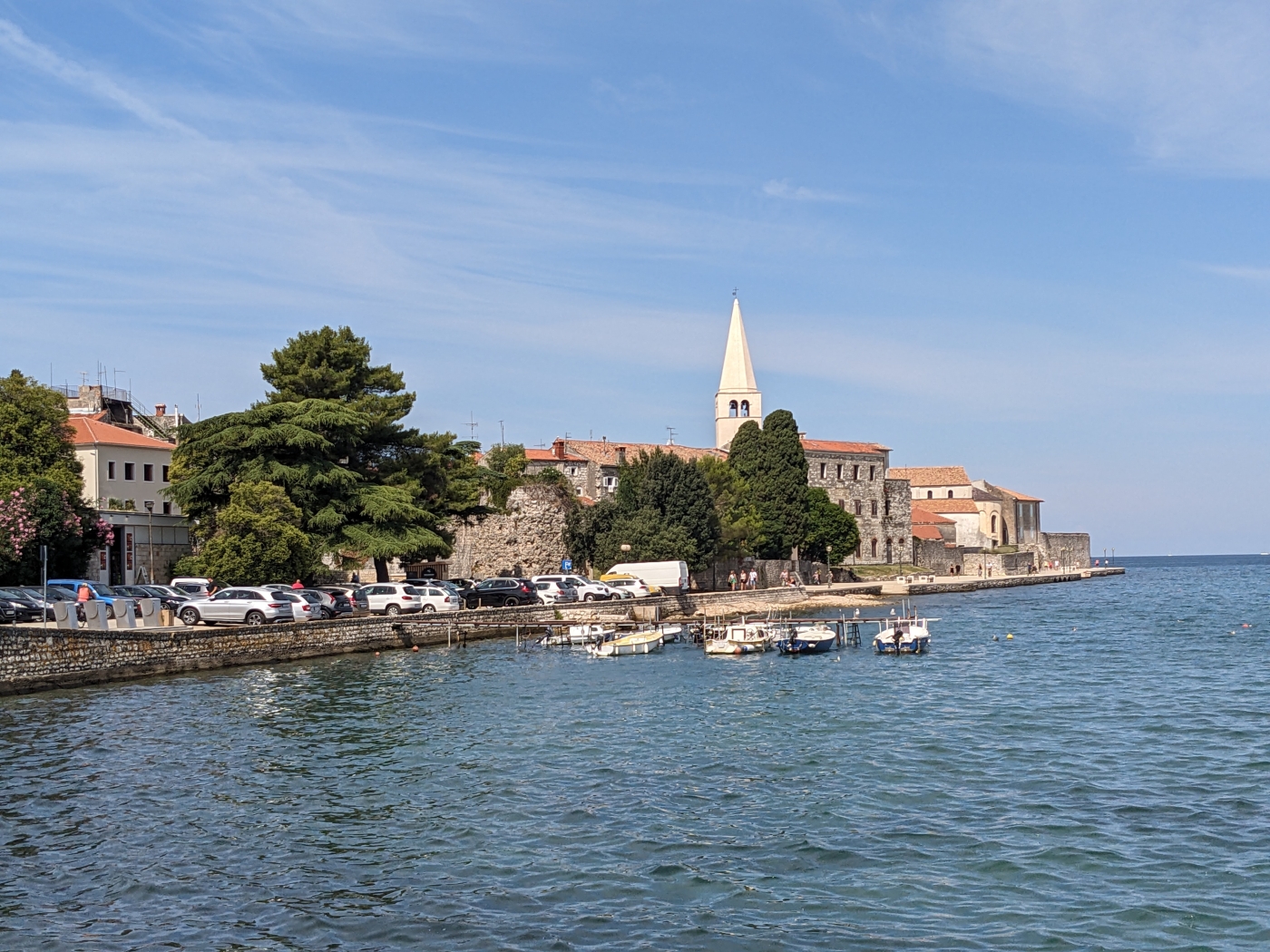
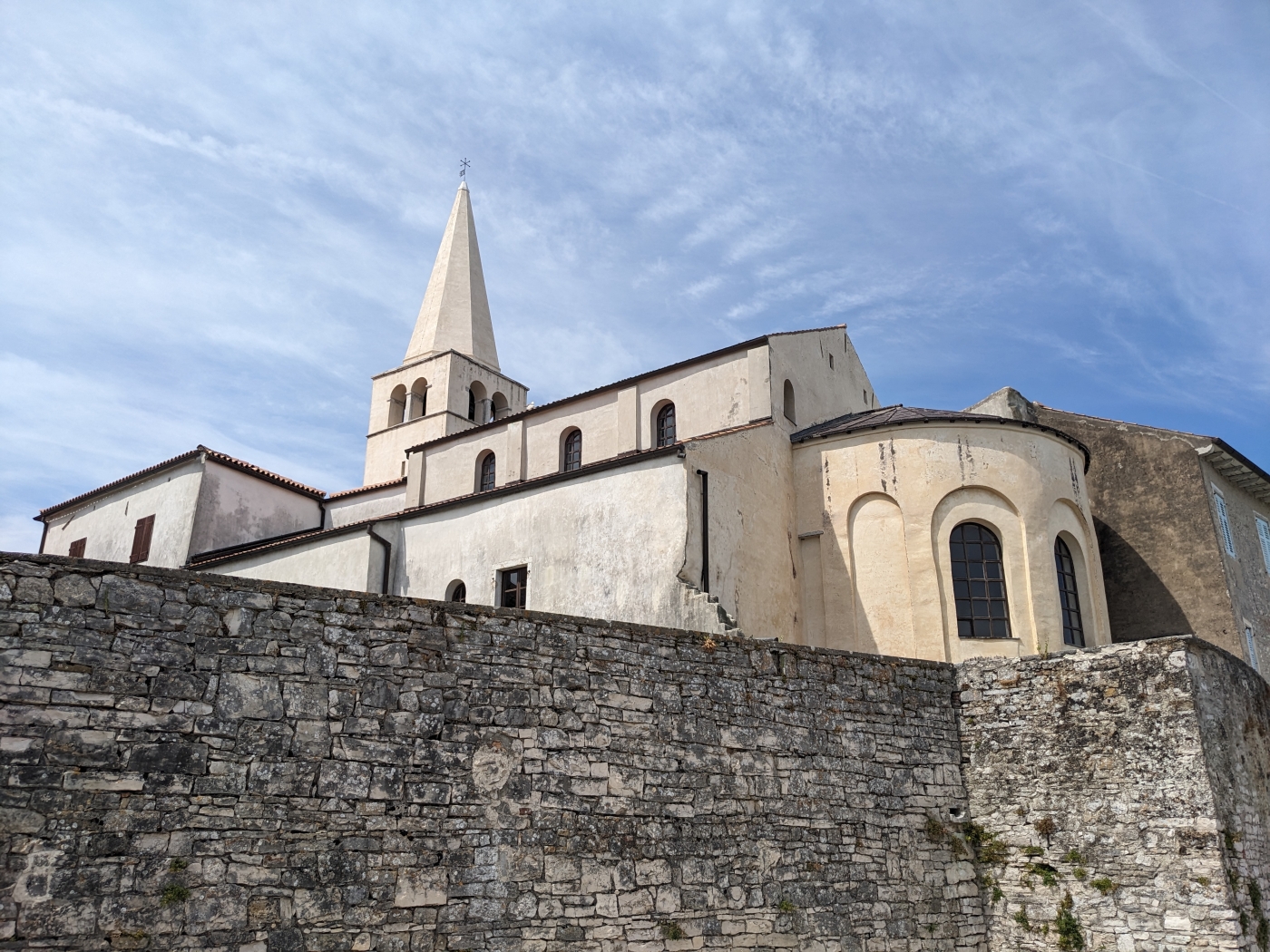
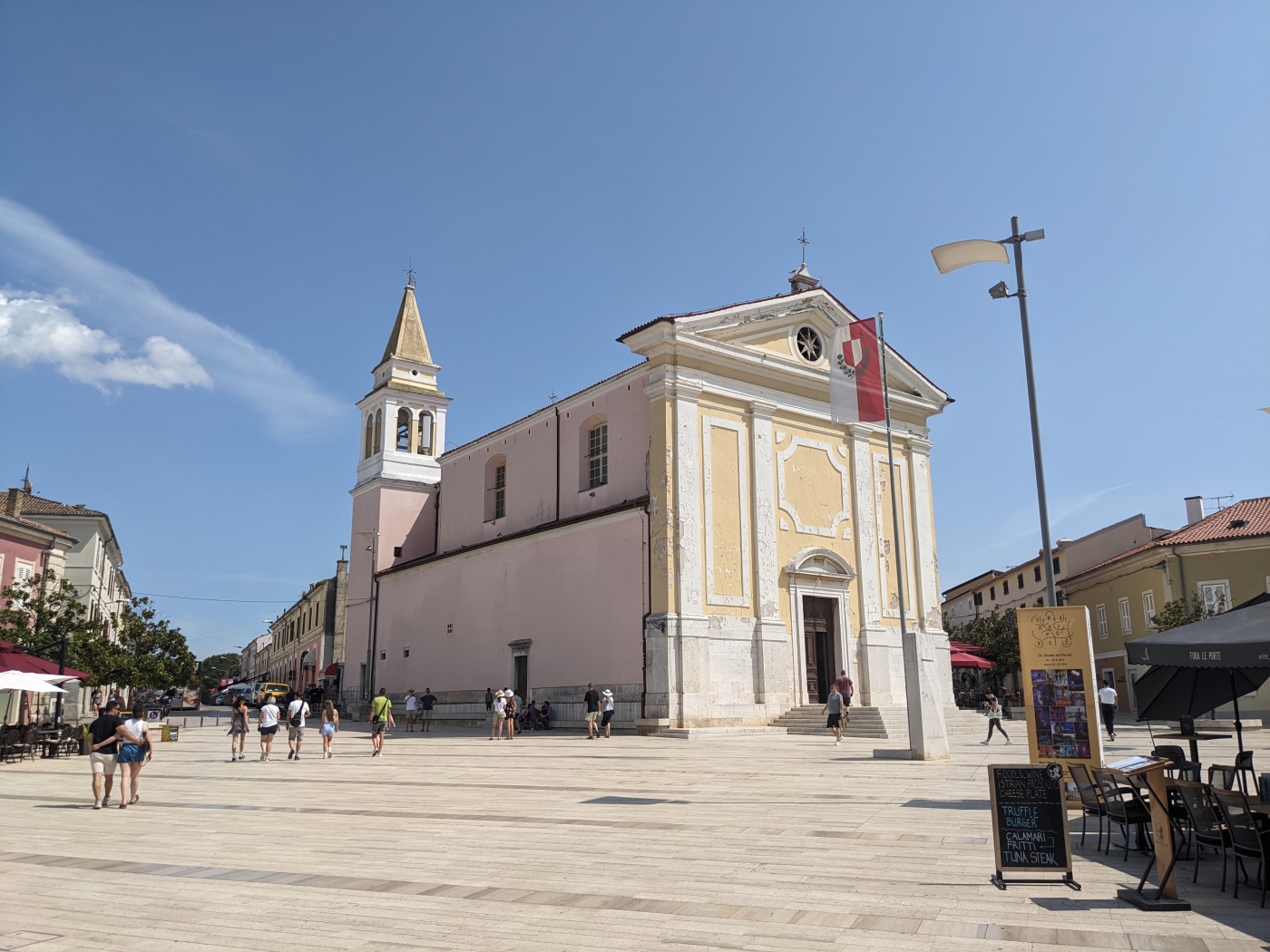
Episcopal Complex of the Euphrasian Basilica in the Historic Centre of Poreč
Porec, Croatia
24.07.2024

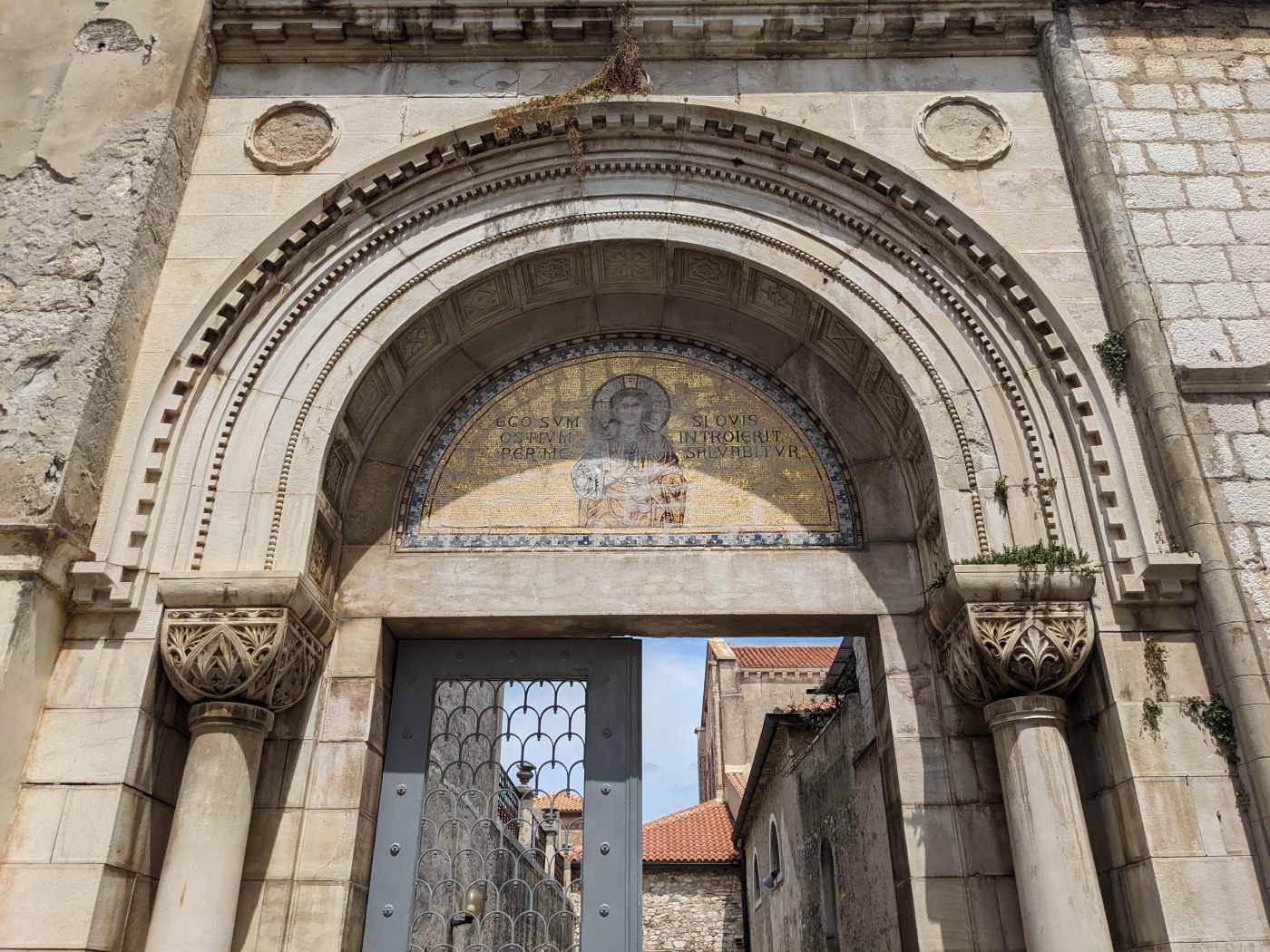
In the heart of the historic coastal town of Poreč, nestled on Croatia's stunning Istrian Peninsula, lies one of the most remarkable examples of early Byzantine art and architecture in the Mediterranean: the Episcopal Complex of the Euphrasian Basilica. This extraordinary ensemble, a UNESCO World Heritage site since 1997, offers an unparalleled journey back to the formative centuries of Christianity.
A Glimpse into Antiquity
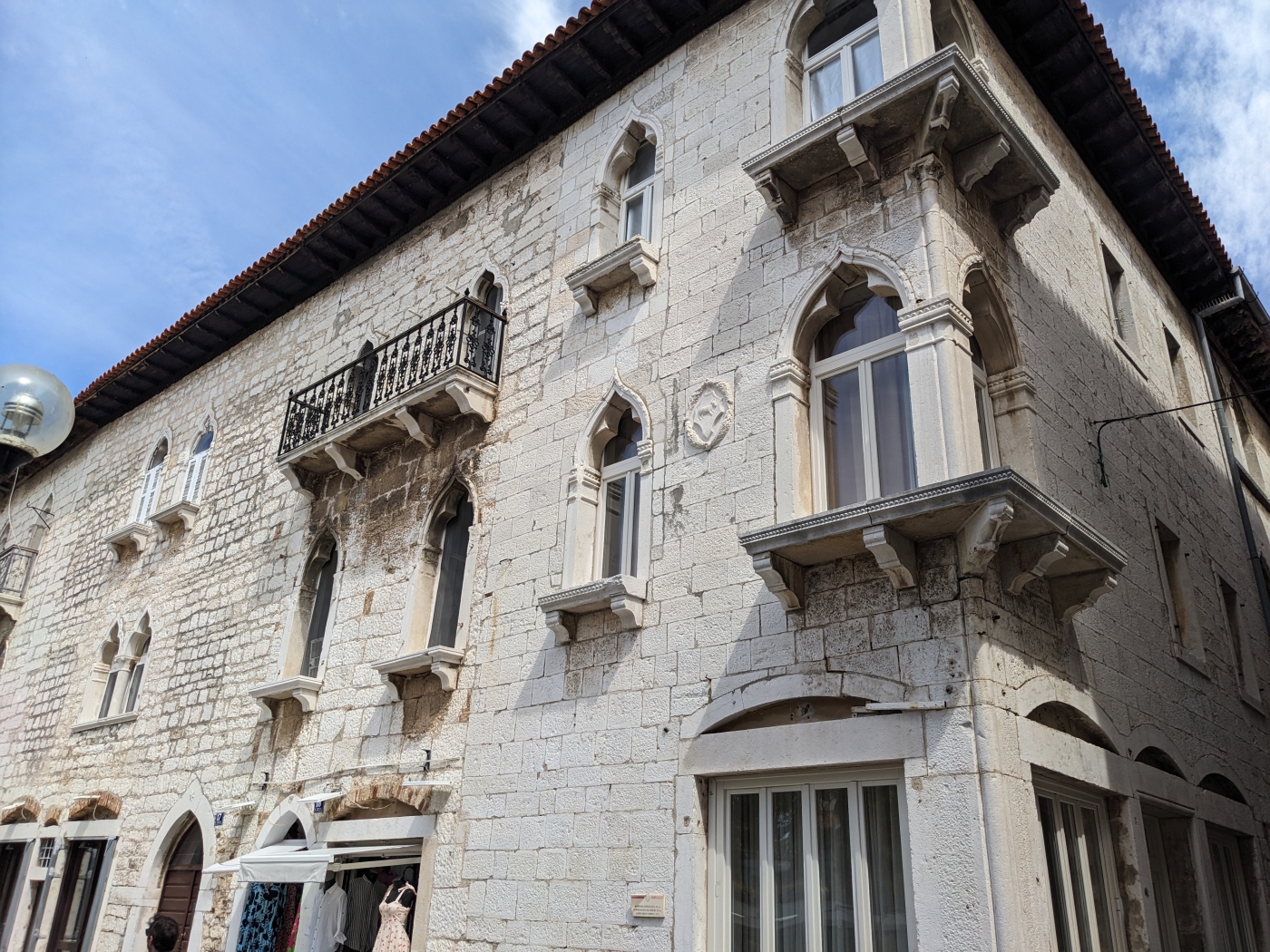
The roots of Poreč, ancient Parentium, trace back to a Roman castrum established in the 1st century BC. The grid pattern of its streets, the Decumanus and Cardo Maximus, still reflects its Roman origins. By the 4th century, a vibrant Christian community had emerged, as evidenced by the remains of an early oratory and an initial complex dedicated to St. Maurus of Parentium, the city's first bishop and a martyr. This early Christian presence laid the groundwork for the magnificent structures that followed.
The Golden Age of Bishop Euphrasius
The complex as we know it today largely owes its splendor to Bishop Euphrasius, who initiated a comprehensive reconstruction in the mid-6th century. Between 539 and 554 AD, under the influence of the Byzantine Emperor Justinian I, Euphrasius oversaw the construction of the magnificent three-naved Euphrasian Basilica. This basilica, built upon the foundations of earlier churches, stands as a testament to the theological and artistic ambitions of the period. Its most captivating features are the breathtaking gold mosaics that adorn the apse, depicting scenes from the Annunciation, the Visitation, and portraits of Christ, the Virgin Mary, and various saints, including Bishop Euphrasius himself holding a model of his creation. These mosaics are among the finest surviving examples of early Byzantine art, renowned for their intricate detail and vibrant colors and serving as a key monument of post-Roman art in Europe.
The complex extends beyond the basilica itself, encompassing a 6th-century octagonal Baptistery, the **Bishop's Palace**, and the remnants of a 4th-century oratory. These structures, along with the adjacent campanile, collectively illustrate the evolution of an early Christian religious center and its sophisticated architectural and artistic achievements. The preservation of this complex within the historic urban fabric of Poreč provides a unique insight into the continuity of religious and urban life from the Roman era through the early Byzantine period and beyond. It serves as a living museum, inviting visitors to experience the spiritual and cultural grandeur of a pivotal moment in European history.
Weiterführende Links
- Episcopal Complex of the Euphrasian Basilica in the Historic Centre of Poreč
- Euphrasian Basilica
- Poreč
The group of religious monuments in Porec, where Christianity was established as early as the 4th century, constitutes the most complete surviving complex of its type. The basilica, atrium, baptistery and episcopal palace are outstanding examples of religious architecture, while the basilica itself combines classical and Byzantine elements in an exceptional manner.
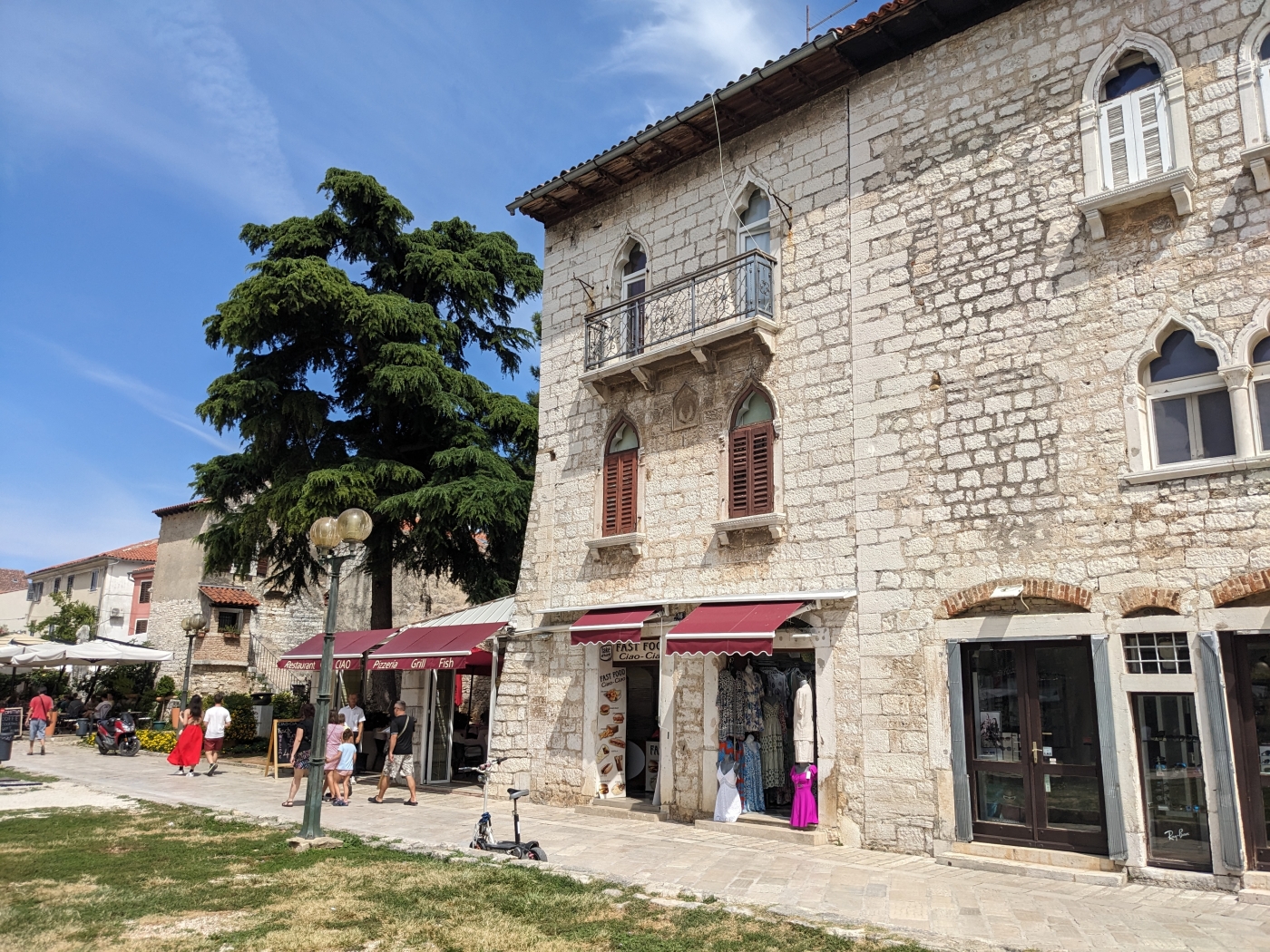
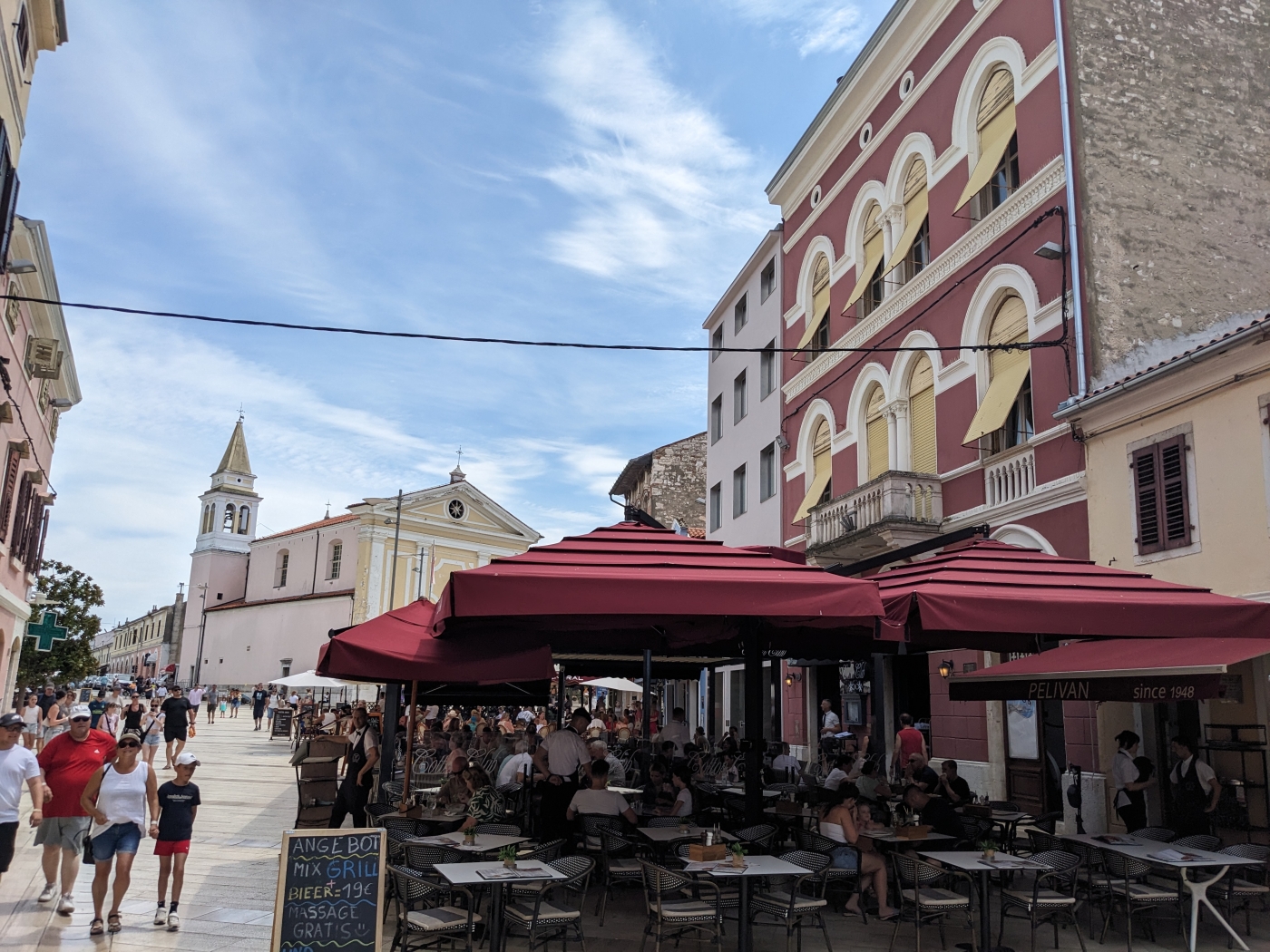
Poreč (pronounced [ˈpɔrɛtʃ]; Italian: Parenzo; known also by several alternative names) is a town and municipality on the western coast of the Istrian peninsula, in Istria County, west Croatia. Its major landmark is the 6th-century Euphrasian Basilica, which was designated a UNESCO World Heritage Site in 1997.
The town is almost 2,000 years old, and is set around a harbour protected from the sea by the small island of Sveti Nikola. Its population of approximately 12,000 resides mostly on the outskirts, while the wider Poreč area has a population of approximately 16,600 inhabitants. The municipal area covers 142 square kilometres (55 sq mi), with the 37 kilometres (23 miles) long shoreline stretching from the Mirna River near Novigrad (Cittanova) to Funtana (Fontane) and Vrsar (Orsera) in the south.