
Plitvice Lakes National Park
Plitvička Jezera, Croatia
13.09.2025

Nestled in the heart of central Croatia, the Plitvice Lakes National Park stands as a breathtaking testament to nature's artistry. This spectacular karst landscape, a UNESCO World Heritage site since 1979, captivates visitors with its vibrant turquoise and emerald lakes, interconnected by a series of cascading waterfalls and rivers. It is a place where geological processes are perpetually at work, shaping a dynamic and incredibly diverse ecosystem.
A Living Geological Marvel
The park's extraordinary beauty stems from a unique geological phenomenon: the continuous formation of natural dams, known as travertine barriers. These barriers are created by the deposition of calcium carbonate from the park's mineral-rich waters, influenced by specific mosses, algae, and bacteria. Over millennia, this process has sculpted 16 terraced lakes, divided into the Upper and Lower Lakes, each with its own distinct charm and character, all flowing into the Korana River. The constantly changing interplay of water, mineral, and vegetation ensures that the landscape is never static, evolving before our very eyes.
A Legacy of Protection and Resilience
The significance of Plitvice Lakes was recognized early, leading to its declaration as a national park in 1949, making it one of the oldest and largest national parks in Croatia. Its inscription on the UNESCO World Heritage list in 1979 acknowledged its outstanding universal value, particularly its unique travertine formation process. During the early 1990s, the park regrettably became a flashpoint during the Croatian War of Independence, suffering damage and being placed on the List of World Heritage in Danger. However, thanks to dedicated conservation efforts and post-war reconstruction, the park was successfully removed from the endangered list in 1997, a testament to its enduring value and the commitment to its preservation.
Biodiversity and Conservation
Beyond its stunning hydrogeological features, Plitvice Lakes National Park is a sanctuary for a rich array of flora and fauna. Ancient beech and fir forests cover much of the park, providing habitat for rare species such as brown bears, wolves, and a multitude of bird species. The crystal-clear waters teem with fish, while endemic plant species thrive in the diverse microclimates. The park serves as a crucial area for biodiversity conservation, ensuring that its natural heritage remains intact for future generations to marvel at and explore.
Further Reading
The waters flowing over the limestone and chalk have, over thousands of years, deposited travertine barriers, creating natural dams which in turn have created a series of beautiful lakes, caves and waterfalls. These geological processes continue today. The forests in the park are home to bears, wolves and many rare bird species.
Plitvice Lakes National Park is one of the oldest and largest national parks in Croatia. In 1979, Plitvice Lakes National Park was inscribed on the UNESCO World Heritage list, for its outstanding and picturesque series of tufa lakes, caves, and connected waterfalls.
The national park was founded in 1949 and is in the mountainous karst area of central Croatia, at the border with Bosnia and Herzegovina. The important north–south road that passes through the national park area connects the Croatian inland with the Adriatic coastal region.
The protected area extends over 296.85 km2 (114.61 sq mi). About 90% of this area is part of Lika-Senj County, while the remaining 10% is part of Karlovac County.
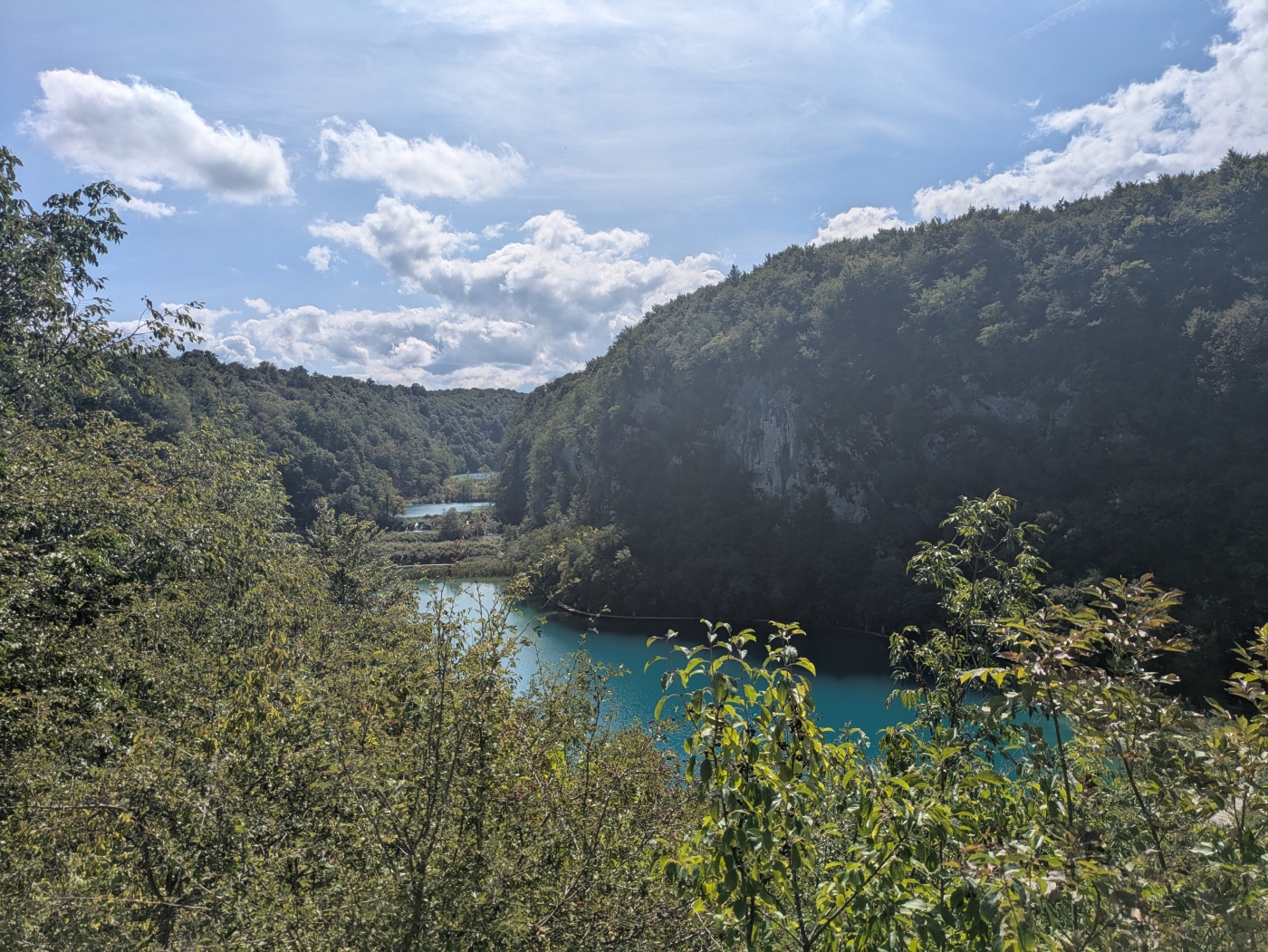
_01.jpg)
_06.jpg)
_08.jpg)
_09.jpg)
_02.jpg)
_05.jpg)
_06.jpg)
_07.jpg)
_10.jpg)
_12.jpg)
_13.jpg)
_14.jpg)
_15.jpg)
_16.jpg)
_17.jpg)
_01.jpg)
_02.jpg)
_03.jpg)
_04.jpg)
_05.jpg)
_06.jpg)
_07.jpg)
_08.jpg)